
Housing projects stall when critical information is scattered.
CivicRails coordinates updates from developers, architects, lenders, and agencies, preserves decisions and evidence in a living project record, and shows who needs to act next.
The burden is often distributed across the project, so nobody sees the total.
Does your workflow have the coordination problems CivicRails is designed to help with?
Start with the workflow, not the software. Six quick questions look at where coordination effort shows up and whether there is something concrete to measure.
Active workflow
Is there a real project or workflow you could evaluate right now?
CivicRails pilots are most useful when there is active coordination work to compare before and after.
This looks like a strong CivicRails pilot candidate.
If the workflow fits, quantify the burden.
Use your own weekly time and labor-cost assumptions to estimate the coordination burden you already have. The calculator measures current burden; it does not assume or guarantee how much CivicRails could save.
Calculate the costComplex projects rarely lack information. The shared understanding gets lost.
Project information moves through organizations, email, meetings, documents, spreadsheets, reviews, and software. People then do the invisible work of reconnecting it: chasing answers, rebuilding status, locating what matters, and making sure somebody owns the next step.
One living record for the whole project.
CivicRails helps keep the shared project picture together while specialized work continues in the systems and professions already responsible for it.
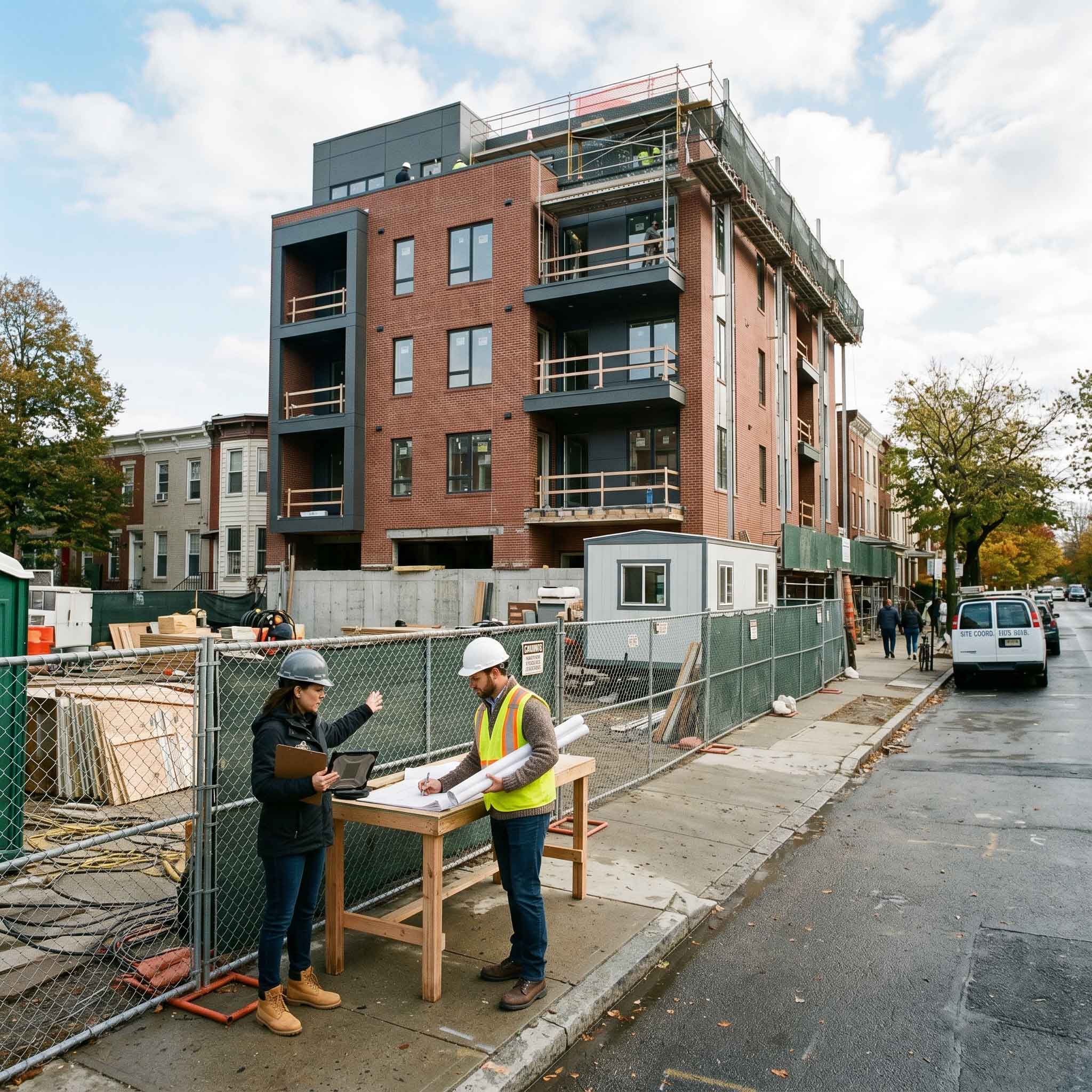
Built for teams accountable for moving complex housing projects forward.
Housing programs
Keep the shared project picture visible across participants and handoffs.
Owners & developers
Keep unresolved work, ownership, and next actions connected.
Nonprofits, CDFIs & technical-assistance providers
Maintain a shared Project Record while helping teams keep work moving.
Project collaborators
Contribute information without requiring every participant to live in another software platform.
AI supports. People decide.
CivicRails can help organize information, prepare drafts, and reduce routine coordination work.
The people responsible for the project remain responsible for professional judgment and decisions.
CivicRails does not approve projects, determine eligibility or code compliance, or replace permitting, GIS, construction management, or professional judgment.
The work stays where it belongs. The shared project picture stays connected.
Teams continue using the systems and professional tools responsible for their specialized work. CivicRails helps keep the shared project picture connected across that work.

Focused housing workflows. Real coordination problems.
Measure one workflow before and after CivicRails.
Start with one real coordination workflow, a small participant roster, and an agreed baseline. Run CivicRails against that bounded workflow and measure what changes in the work people are already doing.